It’s Tariff Week! *
* Hopefully… This is likely the week the Supreme Court issues a ruling on the IEEPA tariffs in place since April 2025 (excluding the 90-day suspension, and other sundry modifications, revisions, pauses, exemptions, etc.). As I noted from the start, this is a deeply flawed policy of questionable legality that was implemented haphazardly (my… Read More The post It’s Tariff Week! * appeared first on The Big Picture.

* Hopefully…
This is likely the week the Supreme Court issues a ruling on the IEEPA tariffs in place since April 2025 (excluding the 90-day suspension, and other sundry modifications, revisions, pauses, exemptions, etc.). As I noted from the start, this is a deeply flawed policy of questionable legality that was implemented haphazardly (my priors are below).
During the SCOTUS arguments this past November, I explained why the “Tariffs are likely to be overturned.” No new information has come out since then that has changed my perspective. Indeed, the Customs department was updating its website and added a way for companies to apply for tariff refunds, revealing their expectations about the SCOTUS decision.1
There has been too much “opinionating” about the tariffs, much of which is misguided and/or misinformed. If you are NOT an attorney, perhaps it is best that you do NOT play an attorney on TV.
For investors, the key question is whether a SCOTUS decision affirming the appellate court’s rejection of the tariffs will be easy for the administration to circumvent. The quick answer is that if it had been quick and straightforward to achieve legally, they would have done so initially. Instead, many of the IEEPA tariffs will require congressional approval; others need the type of administrative action that this government has not demonstrated as its strong suit.
Specifically, I surmise it will be more difficult to navigate around these tariffs if the Supreme Court invalidates all or most of them.2
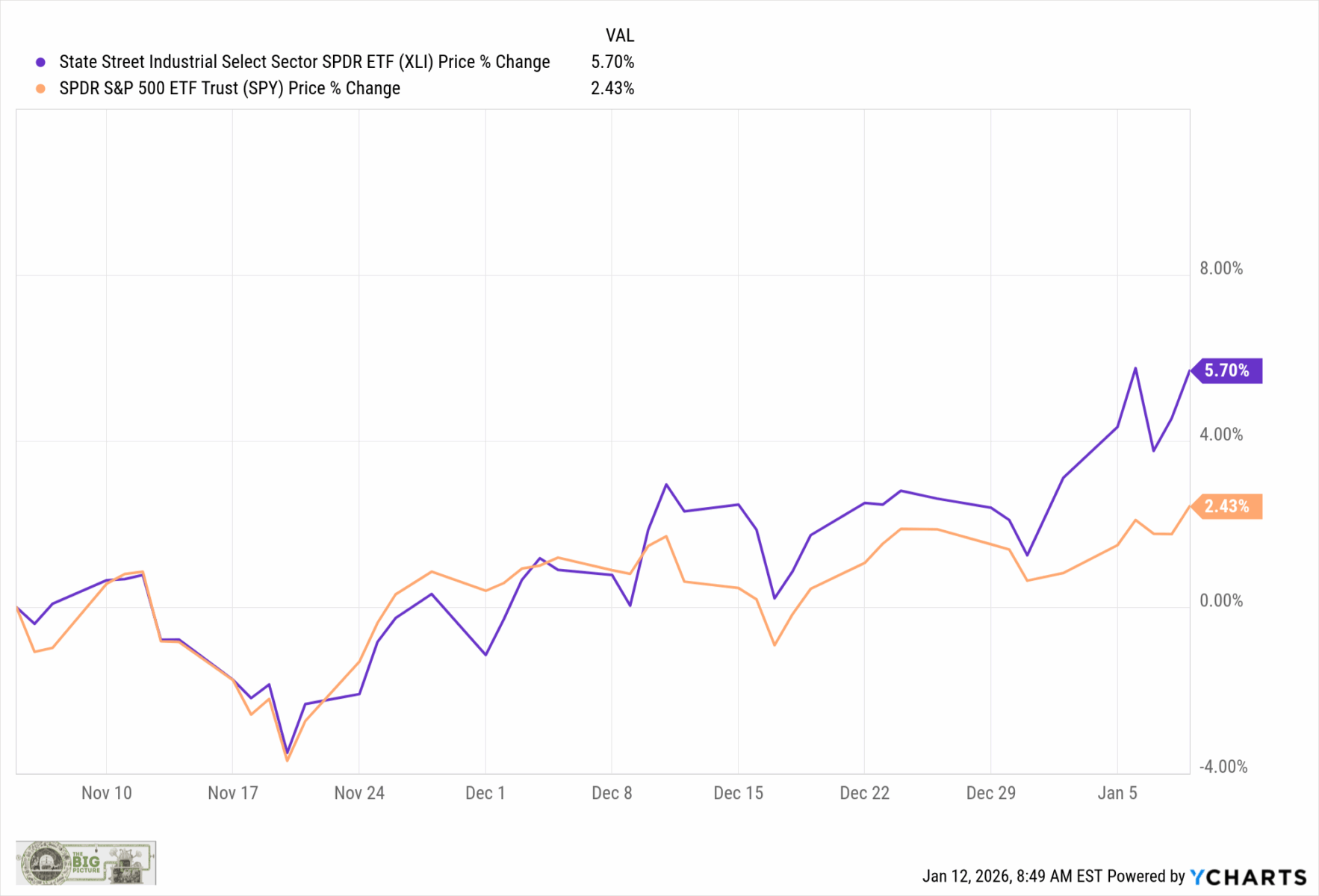
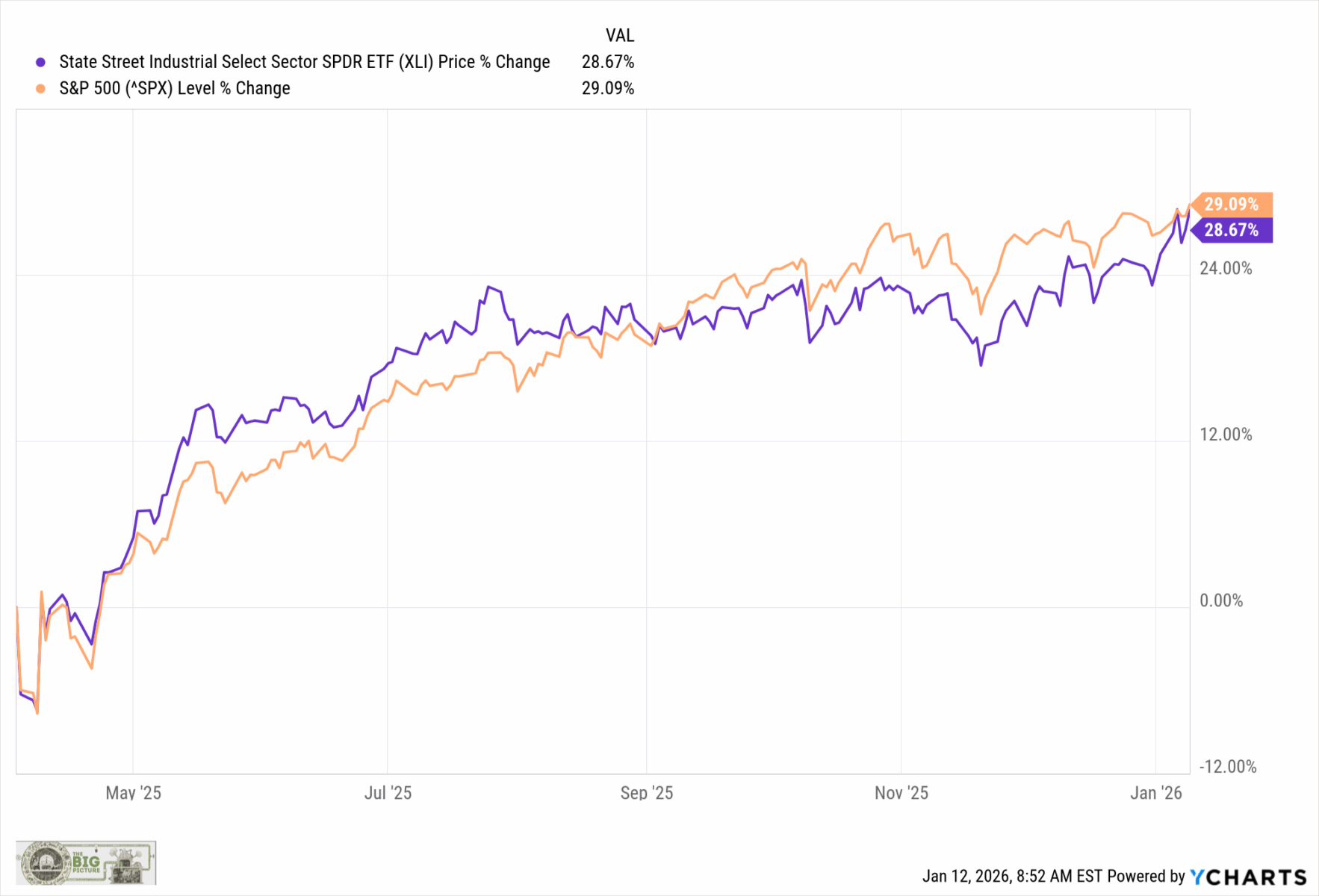
The other question for investors is exactly how much of the tariff repeal is already reflected in market prices. It’s always difficult to assess what is in the collective minds of traders, but consider that since the April 2nd tariff announcements (market prices since April 3rd), the S&P 500 and the Industrial sector are up about the same — 29.1% vs 28.7%. However, since the November 5th argument at the Supreme Court, the S&P500 is up 2.4%, while the SPX manufacturing sector is up more than double that at 5.7%.
I can imagine that a resounding rejection of the tariffs would cause a healthy rally in the broad indices, led by manufacturing companies, retailers, and any firm deeply involved in importing or exporting physical goods. Perhaps that is my wishful thinking, reflecting how RWM’s clients (including myself) are positioned.
A few reminders that provide additional insight to those non-lawyers discussing tariffs in the media:
-President Trump’s second‑term tariffs have pushed the average effective US tariff rate to the highest level in more than a century.
-The legal question is whether IEEPA, which does not mention tariffs, gives the executive branch powers that have previously been reserved to Congress.
-The House IEEPA report stated: “Emergencies are by their nature rare and brief, and are not to be equated with normal ongoing problems.”
-Does the word “Emergency” mean what common usage assumes, or is there some other legislative interpretation as to what an “Emergency” is?
-50 U.S.C. § 1702 allows the President to “investigate, regulate, or prohibit” certain transactions and the “importing or exporting of currency or securities;” this does not give the president the authority to “impose unlimited tariffs on goods from nearly every country in the world.”
-In his first term, President Trump applied Section 232 and Section 301 broadly to both rivals and allies; those tariffs were authorized by legislation and used as a central, recurring instrument of economic/foreign policy.
We could go deeper into the weeds, but instead, I will point you to my conversation with Neal Katyal, the attorney who actually won this case at the DC Court of Appeals and argued it before the Supreme Court.
As to my priors, here is my disclosure: Whatever you are reading here is influenced by my understanding of both the law and markets. That includes three major factors:
A) Bad Policy: From an economic standpoint, tariffs are a terrible idea; this has been proven repeatedly throughout history, but most especially through The Smoot Hartley Tariff Act in 1930, which deepened the Great Depression.
B) Illegal: The 2025 Tariffs are wholly and incontrovertibly unconstitutional.1 Article 2 Section 8 of the US Constitution reserves the power to tax, raise duties, and levy exclusively to Congress and not the Executive branch.
C) China has been a bad actor in international trade, engaging in theft of intellectual property, dumping, anti-competitive import rules, and other bad behaviors. That said, there must be a more productive, intelligent and legal way to negotiate with China.
There is no guarantee that SCOTUS will release its decision this week, but it did fast-track the case back in September. We shall soon find out exactly what this policy, its legality, and economic impact, means to the markets…
See also:
Trump’s tariff revenue tracker: How much is the US collecting? Which imports are hit?
By Gary Clyde Hufbauer and Ye Zhang
PIIE, December 15, 2025
New Trump tariffs collection hits $200 billion, Customs says
By Lori Ann LaRocco and Dan Mangan
CNBC Dec 15 2025
Previously:
Tariffs Likely To Be Overturned (November 5, 2025)
Which States Could Suffer the Most From Trade War Tariffs? (September 16, 2019)
Transcript: Neal Katyal on Challenging Trump’s Global Tariffs (September 8, 2025)
MiB: Special Edition: Neal Katyal on Challenging Trump’s Global Tariffs (September 3, 2025)
Are Tariffs a New US VAT Tax? (March 31, 2025)
The Muted Impact of Tariffs on Inflation So Far (July 17, 2025)
Might Tariffs Get “Overturned”? (July 31, 2025)
The Consequences of Chaos (April 7, 2025)
7 Increasing Probabilities of Error (February 24, 2025)
__________
FOOTNOTES:
1. “Automated Commercial Environment” (ACE) is a secure electronic portal allowing businesses to file import/export data, trade information, and comply with regulations. This is also where companies apply for Tariff refunds.
2. Side note about this particular SCOTUS case: It is so painfully obvious to even a 1L law student that these tariffs are unconstitutional. It should be a 9-0 or 8-1 decision, but is likely more likely to be 7-2 or 6-3 due to the most extreme and/or partisan Justices on the highest bench in the land.
If it’s somehow not overturned, I will venture that it marks the end of the Supreme Court’s credibility as we know it. Even a 5-4 decision will be problematic for the court. I shall save that discussion for another time.
My guess? Justices Samuel Alito, Clarence Thomas, and maybe Neil Gorsuch will dissent…
3. Article I, Section 8, often called the Taxing Clause:
“The Congress shall have Power To lay and collect Taxes, Duties, Imposts and Excises … but all Duties, Imposts and Excises shall be uniform throughout the United States.”
The post It’s Tariff Week! * appeared first on The Big Picture.
Share
What's Your Reaction?
 Like
0
Like
0
 Dislike
0
Dislike
0
 Love
0
Love
0
 Funny
0
Funny
0
 Angry
0
Angry
0
 Sad
0
Sad
0
 Wow
0
Wow
0