Good Quarterly Earnings Behavior
The SEC has proposed allowing companies to move to semiannual earnings reporting. On Monday, we discussed why eliminating quarterly earnings as a basic premise was a bad idea: it reduces transparency, increases volatility, and is likely to create a surge in insider trading, all while accomplishing little to move us away from the… Read More The post Good Quarterly Earnings Behavior appeared first on The Big Picture.

The SEC has proposed allowing companies to move to semiannual earnings reporting.
On Monday, we discussed why eliminating quarterly earnings as a basic premise was a bad idea: it reduces transparency, increases volatility, and is likely to create a surge in insider trading, all while accomplishing little to move us away from the short-termism surrounding quarterly earnings at present.
In the future, I’ll do a deep dive into why this is such a bad idea.
For today, let’s go in the opposite direction and consider the best practices of some of the largest and/or smartest companies in America. They have been managing around this issue on their own, taken a variety of approaches regarding earnings, and have been applauded by their shareholders for how they conduct their business.
Here are some creative, innovative, clever ideas that have become best practices – even without being required to do so by the SEC.
Berkshire Hathaway: does not do a quarterly call at all. The Q1 results historically came out alongside an 8-K and a quick slide at the annual meeting. Buffett has used this meeting’s Q&A to add whatever color he wanted to the numbers. Greg Abel’s first quarter (Q1 2026) still produced a Saturday earnings release with no accompanying call, just the report. Given that he was selected by Buffett, it is hard to imagine that changing very much.
Costco: historically refused to provide forward guidance, and the call is famously short and unadorned. To keep their investors informed, the CFO does monthly comp sales updates. This has made COST’s quarterly calls mostly uneventful.
Tootsie Roll: Admittedly, BRK & COST are giant companies with unusually loyal shareholders. Let’s consider a smaller player: Tootsie Roll. Their Q1 2026 release was issued on April 22, 2026. The entire document is a one-page press release. It is filed as Exhibit 99.1 to an 8-K.
That’s it! Nothing else to see here, please move along…
No conference call, no webcast, no slide deck, no management discussion, no analysis – just the naked release itself. It does not include a balance sheet, a cash flow statement, or a segment breakdown. Chairman Ellen Gordon includes a brief narrative and a four-line summary table. Oh, and precisely zero forward guidance.
Other companies split the difference with pre-recorded calls. The Tisch family runs the Loews Corporation, and instead of a live call, they file a written set of “Earnings Remarks” as an exhibit to the 8-K in PDF form; again, they eschew the live Q&A format and provide no forward guidance. Google similarly pre-records the management remarks via a script recorded up to 48 hours ahead of time. Mark Leonard of Constellation Software is openly disdainful of what he calls “IR theater.” The reclusive billionaire shares few speculative opinions beyond his shareholder letters. (He famously asked the board to reduce his salary to zero.)
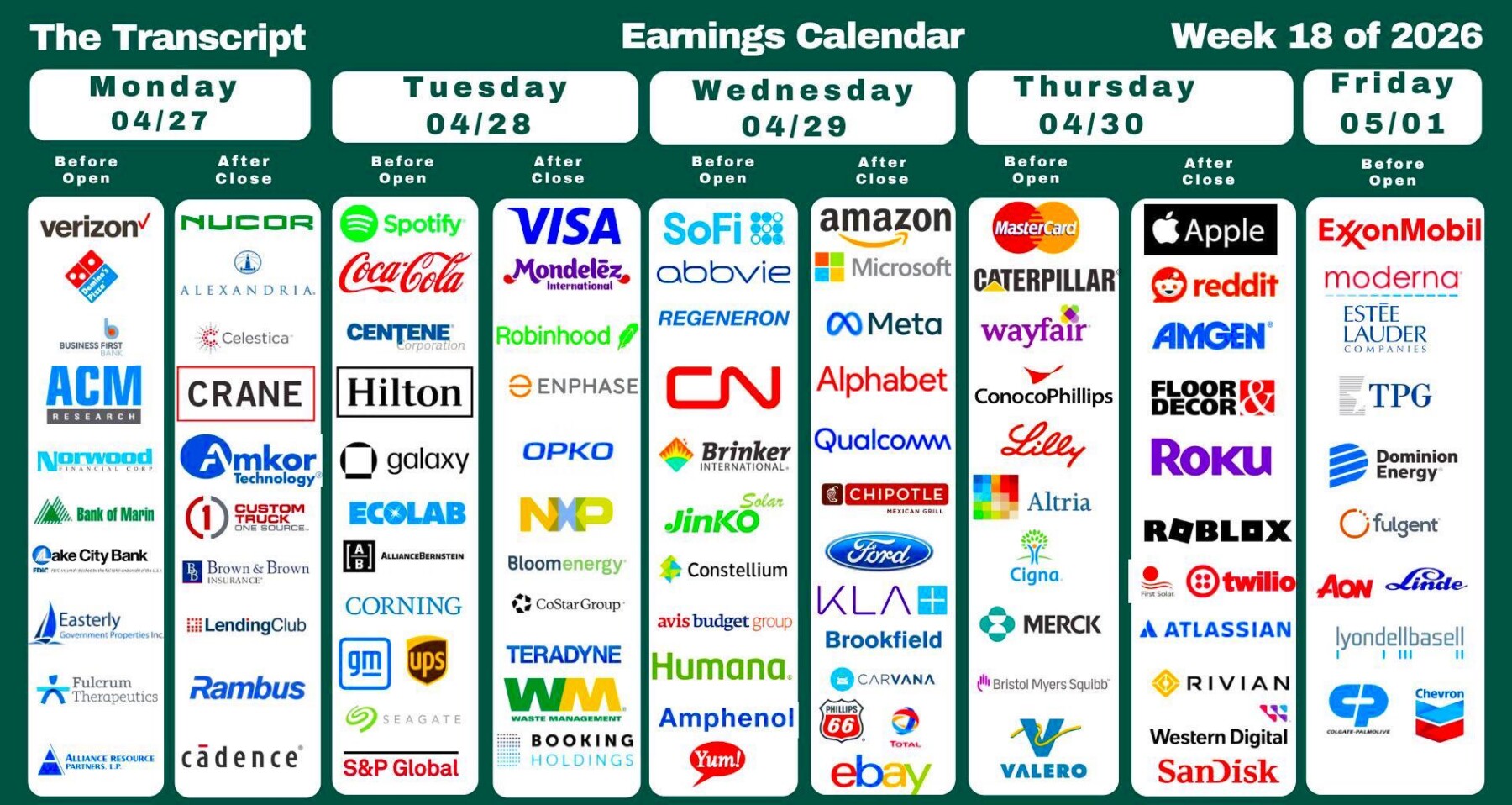
Then there is Robinhood, which has reinvented what an earnings call looks like. CEO Vlad Tenev has said he is trying to “improve the branding of being a public company,” which is very on-brand for a brokerage app in an era when fewer and fewer companies are going public. (See, e.g., Q2 2025 Earnings Call, July 30, 2025)
They livestream the video on multiple platforms, including Tenev’s X account, in front of an in-person audience physically at a venue. The Q1 2026 call (April 28) was held outdoors at their Menlo Park HQ – it could be the first-ever outdoor earnings call in history.
Stock ownership is the entry ticket for asking a question – it is a mix of retail shareholders, “finance content creators, analysts, and institutional shareholders. Robinhood begins with the Q&A, via Say Technologies – Shareholders’ questions are submitted in advance and “upvoted” during the week leading to the call.
There are plenty of others: Tesla, Amazon, Opendoor, Netflix, Spotify and Palantir all come to mind.
The bottom line is that the SEC should encourage more information sharing, greater transparency, and more frequent earnings reporting — not less.
Allowing less information, rather than mandating more, is a step in the wrong direction.
Previously:
Artificial Intelligence and Quarterly Earnings Reports (May 11, 2026)
Report Earnings Daily (Bloomberg, August 20, 2018)
The post Good Quarterly Earnings Behavior appeared first on The Big Picture.
Share
What's Your Reaction?
 Like
0
Like
0
 Dislike
0
Dislike
0
 Love
0
Love
0
 Funny
0
Funny
0
 Angry
0
Angry
0
 Sad
0
Sad
0
 Wow
0
Wow
0